



Selecting an application architecture is one of the most consequential decisions an engineering organization will make. The structural design of a software system dictates how teams collaborate, how code is tested and deployed, and how the platform scales under load. Two primary architectural patterns dominate modern software development: the traditional monolithic architecture and the decentralized microservices architecture.
Understanding the operational trade-offs between a monolith and a microservices ecosystem goes far beyond choosing a deployment target. It requires a hard look at organizational maturity, domain boundaries, network latency, and maintenance overhead. Neither paradigm is universally superior. Instead, each serves distinct organizational goals and project lifecycles.
Understanding the Monolithic Architecture
A monolithic architecture is built as a single, unified unit. In this model, all components of the application—such as user interface rendering, business logic execution, data access layers, and background job processing—are combined into a single codebase and compiled or packaged into one deployable artifact.
Architectural Mechanics
In a classic monolithic application, communication between different modules happens via in-memory method calls, function invocations, or object references within the same process space.
Key technical characteristics include:
-
Unified Codebase: All developers work within the same repository, sharing libraries, data models, and utilities directly.
-
Centralized Database: The application typically connects to a single relational or NoSQL database instance where all tables and schemas reside under one administrative boundary.
-
Single Deployment Unit: Releasing updates requires rebuilding and redeploying the entire application package, whether it is a Java WAR file, a Ruby on Rails bundle, or a compiled Go binary.
Strengths and Trade-offs
The monolith remains the default starting point for most greenfield projects for good reason. It offers extreme simplicity during early development stages. Developers can write code quickly without worrying about network partitions, distributed transactions, or complex API contracts. Debugging is straightforward because developers can attach a local debugger and step through the entire call stack from the HTTP entry point down to the database driver.
However, as an organization and its codebase grow, monolithic applications encounter severe scaling limitations:
-
Deployment Bottlenecks: A bug fix in a minor reporting module requires redeploying the entire application, increasing release risk and downtime windows.
-
Tight Coupling: Over time, developers frequently bypass module boundaries, creating circular dependencies and spaghetti code that makes isolated unit testing nearly impossible.
-
Scaling Inefficiencies: If only one background worker component experiences heavy CPU load, the entire monolithic instance must be replicated across multiple servers rather than scaling just the resource-intensive module.
Understanding the Microservices Architecture
Microservices architecture structures an application as a collection of loosely coupled, independently deployable services. Each service represents a distinct business capability, runs in its own process, and communicates with other services over lightweight network protocols, typically HTTP/2, gRPC, or asynchronous message brokers.
Architectural Mechanics
In a microservices ecosystem, boundaries are drawn around business domains rather than technical layers. Each service owns its internal data model and dedicated persistent storage, completely decoupling its internal schema from the rest of the system.
Core operational concepts include:
-
Decentralized Data Management: Each microservice manages its own database. Services are strictly forbidden from sharing database tables directly, enforcing data encapsulation through APIs.
-
Independent Lifecycle: Teams can develop, test, deploy, and scale individual services autonomously without coordinating release schedules with other engineering squads.
-
Polyglot Programming: Because services communicate over standardized network protocols, different microservices can be written in entirely different programming languages or frameworks depending on performance requirements.
Strengths and Trade-offs
Microservices solve the organizational scaling challenges that plague large monoliths. They allow independent engineering teams to move quickly, deploy updates multiple times a day, and scale specific high-traffic components without wasting infrastructural resources.
Yet, microservices introduce a massive layer of distributed systems complexity:
-
Network Latency and Reliability: In-memory function calls are replaced by network requests over TCP, introducing latency, serialization overhead, and potential failure points due to network partitions.
-
Distributed Transactions: Maintaining ACID guarantees across multiple independent databases requires complex patterns like the Saga pattern or eventual consistency models, complicating data integrity logic.
-
Operational Overhead: Managing a fleet of dozens or hundreds of services demands advanced platform engineering tooling, including container orchestration platforms like Kubernetes, centralized logging, distributed tracing, and automated service meshes.
Technical Comparison
Evaluating these architectures across core operational vectors reveals how they perform under real-world production demands.
-
Development Speed and Complexity: Monoliths accelerate early development because the mental model remains simple and localized. Microservices slow down initial setup due to infrastructure scaffolding, but they prevent organizational gridlock as teams scale past fifty developers.
-
Testing and Debugging: Monoliths allow end-to-end integration testing within a single test suite. Microservices require complex contract testing, mocking external service dependencies, and tracing requests across multiple server boundaries using correlation IDs.
-
Scalability Profiles: Monoliths scale vertically or by duplicating the entire application stack. Microservices provide granular horizontal scaling, allowing resource-heavy services to scale independently based on precise compute metrics.
-
Fault Isolation: In a monolith, a memory leak or infinite loop in a background module can crash the entire application process. In a microservices architecture, a crashing service fails independently, provided the calling layers implement robust circuit breakers and fallback mechanisms.
When to Choose a Monolith
Starting with a monolith is almost always the correct architectural decision for early-stage products, startups, and internal business tools. When product-market fit is unproven, engineering velocity and rapid iteration matter more than infinite scalability.
A well-structured modular monolith can scale to support millions of active users if developers enforce strict internal boundaries. By separating code logically into distinct packages or modules while keeping deployment centralized, teams retain the simplicity of a single codebase while preserving the option to extract individual modules into microservices later when specific scaling bottlenecks actually materialize.
When to Choose Microservices
Transitioning to or starting with a microservices architecture is justified under specific organizational and technical conditions.
Large engineering organizations with dozens of autonomous product teams benefit immensely from microservices because independent deployment pipelines eliminate inter-team release coordination friction. Systems with highly asymmetrical scaling requirements—such as an e-commerce platform where the product catalog search engine handles ten times the traffic of the checkout pipeline—also benefit from separating resource-heavy components into dedicated microservices. Finally, applications requiring polyglot capabilities or strict multi-tenant security boundaries can leverage microservices to isolate workloads effectively.
Frequently Asked Questions
What is a modular monolith and how does it differ from a traditional monolith?
A modular monolith is structured with strict internal boundaries and folder segregation that prevents direct coupling between disparate business domains. While it compiles and deploys as a single unit, its internal code organization mirrors microservices domain logic, making it significantly easier to refactor into independent services later if scaling demands it.
How do microservices handle distributed data consistency without shared databases?
Microservices manage data consistency through eventual consistency patterns and choreography or orchestration of distributed transactions. Developers frequently use the Saga pattern, where a series of local transactions update data across participating services sequentially, supplemented by compensating transactions that roll back changes if a step fails.
What role does an API Gateway play in a microservices architecture?
An API Gateway acts as the single reverse-proxy entry point for all client requests entering a microservices ecosystem. It handles cross-cutting concerns such as SSL termination, global authentication verification, rate limiting, request routing, and payload aggregation, shielding internal microservice topologies from external clients.
Why do some companies choose to migrate from microservices back to a monolith?
Some organizations adopt microservices prematurely before achieving product-market fit or organizational maturity. The resulting operational burden, network debugging complexity, and infrastructure costs can overwhelm small teams, prompting a strategic consolidation back into a well-structured monolith to reduce overhead.
How does service discovery function within a dynamic microservices environment?
In containerized microservices environments, service instances scale up and down dynamically with ephemeral IP addresses. Service discovery mechanisms—such as DNS-based lookups, Consul, or Kubernetes internal service routing—allow services to locate and communicate with healthy peer instances automatically without hardcoded IP configurations.
What impact does architecture choice have on CI/CD pipeline complexity?
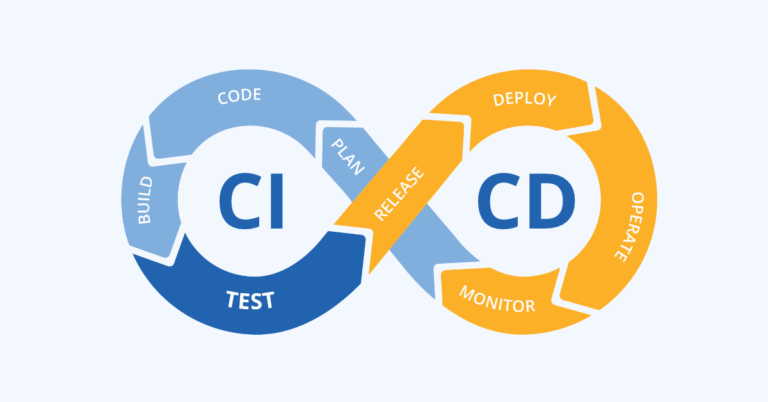
A monolithic architecture requires a single, straightforward CI/CD pipeline that builds, tests, and deploys one unified artifact. A microservices architecture demands decentralized pipelines for every independent repository or service, necessitating advanced GitOps workflows, automated canary deployments, and robust infrastructure-as-code automation.