


For decades, security in software development was an afterthought. Teams treated application security as a final regulatory checkpoint right before a major release. Developers wrote code rapidly, passed compiled binaries over to quality assurance teams, and then pushed the release package toward a dedicated security team for manual penetration testing. If security analysts discovered vulnerabilities, the entire release stalled, initiating a chaotic cycle of emergency patches, blame shifting, and missed deadlines.
The modern software landscape cannot sustain this adversarial friction. With organizations deploying code dozens or hundreds of times per day via continuous integration and continuous deployment pipelines, traditional security checks act as debilitating bottlenecks.
The shift-left security philosophy emerged to resolve this structural impasse. By moving security responsibilities earlier in the software development lifecycle, engineering teams discover, analyze, and remediate vulnerabilities at the source, long before code ever approaches a production runtime.
The Core Concept of Shifting Left
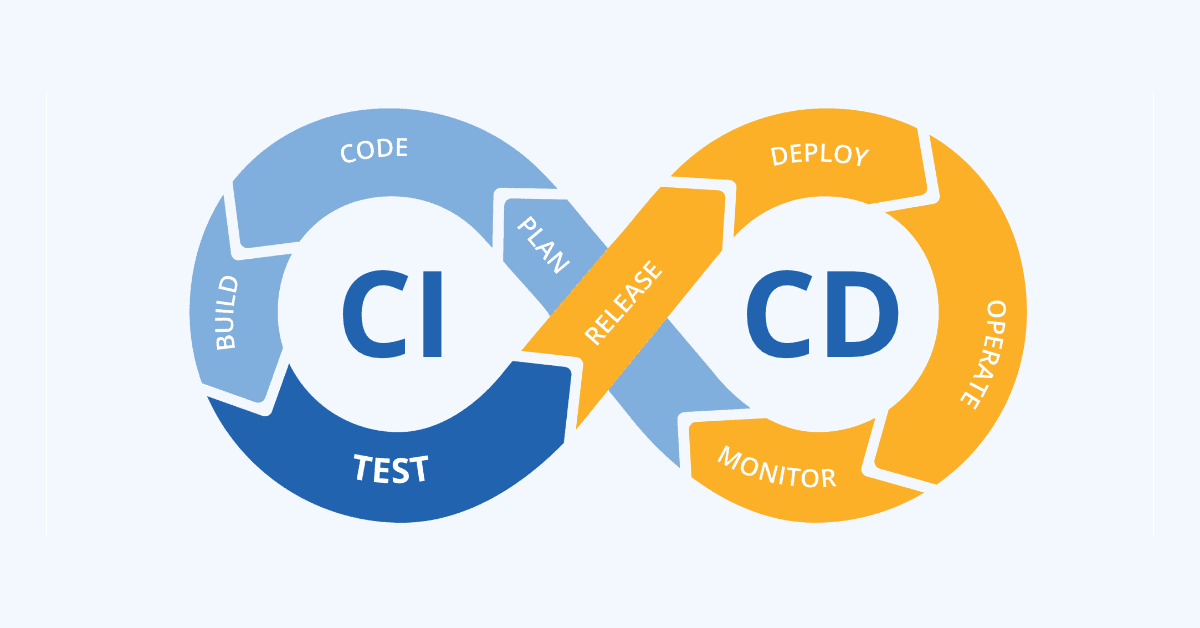
Visualizing the standard software development lifecycle reveals a sequence moving from left to right: planning, coding, building, testing, deploying, and operating.
In legacy workflows, security auditing lived on the far right. Shift-left security systematically pulls those validations to the far left. Rather than treating security as an external audit, shifting left integrates defensive design, automated analysis, and compliance verification directly into the developer workflow.
This transition transforms security from a reactive gatekeeper into a continuous, automated engineering discipline. Developers do not write code in a vacuum only to be criticized weeks later. Instead, automated tools provide immediate feedback inside their local development environments and continuous integration pipelines.
The Economic Reality of Early Remediation
The financial imperative behind shifting left is striking. Fixing a software flaw during the initial architecture or coding phase costs a fraction of fixing that same vulnerability once it enters testing.
If a vulnerability bypasses QA and reaches production, remediation costs multiply exponentially. Teams must issue out-of-band releases, initiate incident response procedures, perform forensic audits, and face potential regulatory penalties or reputational damage. Correcting an insecure deserialization flaw or a hardcoded credential takes minutes when flagged in a code editor; it takes weeks and thousands of dollars when discovered during an active production breach.
Core Pillars of an Effective Shift-Left Pipeline
Shifting left does not mean handing developers a massive PDF report generated by an enterprise scanner and expecting them to resolve every line. True adoption requires a cohesive suite of automated tools embedded seamlessly into modern pipeline stages.
Static Application Security Testing
Static Application Security Testing tools analyze application source code, byte code, or binaries in a non-running state. These engines inspect code structure, looking for known antipatterns such as unescaped SQL queries, insecure cross-site scripting handshakes, buffer overflows, and unsafe cryptographic primitives.
Integrated directly into pull request checks or local Git hooks, static testing gives immediate feedback. When a developer submits a merge request, the engine scans the diff and flags vulnerable syntax alongside inline recommendations, allowing the engineer to remediate the flaw before the branch merges into the trunk.
Software Composition Analysis
Modern software is rarely built entirely from scratch. The vast majority of production applications consist of third-party dependencies, open-source libraries, and nested package trees. Developers typically write only a thin layer of proprietary business logic connecting these components.
Software Composition Analysis focuses specifically on this supply chain surface area. It scans dependency manifests, identifies outdated or compromised libraries, checks against public vulnerability registries, and verifies licensing compliance. If a project inadvertently pulls in a package version with an exploitable remote code execution flaw, the automated scanner fails the build before the code reaches artifact storage.
Secret Detection and Credential Hygiene
One of the most frequent vectors for real-world infrastructure compromise is the accidental exposure of sensitive keys in version control. Developers often leave cloud access tokens, database connection strings, or private encryption keys in local configuration files, accidentally pushing them to shared repositories.
Shift-left pipelines implement pre-commit and pre-push filters that detect high-entropy strings and recognizable API key structures. By blocking commits that contain unencrypted secrets, organizations prevent sensitive access tokens from ever entering Git histories, eliminating the need for complex credential revocation workflows.
Infrastructure as Code Scanning
As cloud-native architectures expanded, infrastructure provisioning migrated from manual console configurations to declarative code. Systems deploy compute instances, Kubernetes clusters, and cloud storage using templates written in Terraform, CloudFormation, or Ansible.
Shifting left extends security principles directly to this infrastructure layer. Automated linters scan configuration templates prior to deployment, identifying misconfigurations such as unencrypted object stores, publicly accessible management ports, or over-privileged identity access management policies. Security validation occurs before the cloud provider allocates a single resource.
Cultural Transformation: DevSecOps Over Developer Friction
The greatest point of failure in shift-left implementations is not technical tooling; it is organizational culture. If leadership merely forces a dozen noisy scanning tools onto engineering teams without addressing operational friction, developer productivity plummets.
Eliminating Alert Fatigue
Poorly calibrated security tools generate immense volumes of false positives. If a developer receives fifty critical warnings on every build, and forty-nine turn out to be harmless contextual edge cases, the engineer will quickly ignore the scanner entirely.
Security teams must tune scanners aggressively before enforcing hard build failures. Rulesets should begin with high-confidence, low-noise rules targeting catastrophic vulnerabilities. As pipelines mature, teams can gradually tighten thresholds, ensuring that every alert presented to a developer represents an actionable, verified risk.
Security Champions within Feature Teams
Security cannot remain isolated in a separate department. Modern engineering groups cultivate security champions: developers embedded within standard product squads who receive specialized training in threat modeling and defensive coding.
These champions act as the primary security advocates during early sprint planning and architecture reviews. They identify structural risks before code is written, bridge communication gaps between technical teams, and help their peers navigate tooling output without waiting for formal security department reviews.
Realizing the Benefits of Early Security Integration
Organizations that successfully embed security into their early engineering pipelines unlock substantial operational advantages:
-
Accelerated Time to Market: Eliminating lengthy, post-development security audit phases allows release cycles to proceed on schedule with predictable deployment cadences.
-
Enhanced Developer Competence: Real-time feedback loops train developers on modern security hygiene as they write code, continuously reducing the frequency of recurring coding mistakes.
-
Streamlined Regulatory Compliance: Automated validation checkpoints generate auditable change logs within the pipeline, significantly reducing the manual labor required for external compliance audits.
-
Resilient Software Architecture: Early threat modeling forces teams to account for data boundaries, privilege boundaries, and authentication handshakes during the design phase rather than attempting to retrofit protection onto an insecure foundation.
Frequently Asked Questions
Does shifting left eliminate the need for traditional penetration testing?
No. Shifting left optimizes vulnerability management during development, but external penetration testing and runtime auditing remain vital. Penetration testers evaluate holistic attack chains, business logic bypasses, and complex environmental configurations that automated code scanners cannot interpret. Shift-left security reduces the surface area of basic flaws so that penetration testing can focus on sophisticated, deep-logic attack surfaces.
What is the primary difference between SAST and DAST in a pipeline?
Static Application Security Testing evaluates source code without running the application, focusing on syntax, structural antipatterns, and direct vulnerabilities in code files. Dynamic Application Security Testing evaluates a running application from the outside, sending varied inputs and payloads against active network ports and web endpoints to identify runtime vulnerabilities, misconfigured web servers, and authentication bypasses.
How do teams prevent shift-left tools from slowing down CI build times?
Engineering teams keep pipeline runs fast by running lightweight checks, such as secret scanning and differential static analysis, directly on pull requests. Comprehensive, deep-tier scans that require full project compilation or exhaustive dependency traversal can be scheduled asynchronously on merge to staging branches or run as scheduled nightly builds.
Can shift-left security detect zero-day vulnerabilities in open-source components?
Shift-left tools detect known vulnerabilities cataloged in public databases and advisory networks. While they cannot always detect an unannounced, unknown zero-day flaw in a dependency, behavioral analysis tools, dependency-pinning policies, and anomaly detectors help limit blast radius and allow rapid patching as soon as a zero-day receives a public patch or identifier.
What role does threat modeling play in shift-left security?
Threat modeling is the left-most activity in the entire development process. Conducted during system architecture and requirement planning, threat modeling identifies potential adversaries, data flow boundaries, and attack vectors before a single line of code is produced, guiding secure structural decisions from the onset.
How should organizations measure the success of a shift-left initiative?
Teams track success by measuring metrics such as mean time to remediate vulnerabilities, the percentage of security defects discovered in pre-production environments versus production environments, the volume of false-positive build breaks, and the total reduction in production emergency patches.
How does shifting left affect developer autonomy?
When implemented properly, shifting left increases developer autonomy. Rather than waiting weeks for permission from a centralized security review board, developers receive clear, programmatic criteria for what constitutes secure code, allowing them to release features independently without friction.