


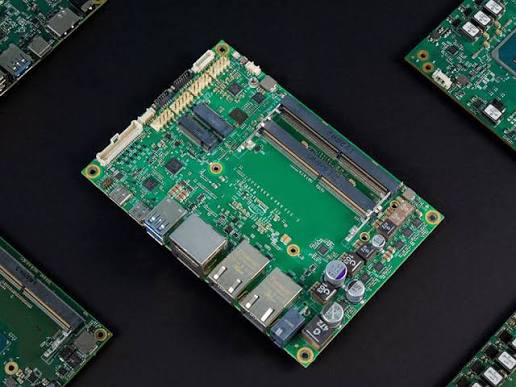
Industrial automation historically relied on rigid, proprietary programmable logic controllers (PLCs) and bulky industrial PCs (IPCs). While these platforms deliver exceptional stability, they often lock engineering teams into closed vendor ecosystems, expensive licensing models, and limited compute capacity for modern edge workloads. The rise of single-board computers (SBCs) has upended this paradigm. Today, building custom SBC-based solutions allows industrial engineers to run containerized microservices, machine vision inference, and high-speed telemetry collection right next to the physical process machinery.
Transitioning an SBC from a lab prototype to a mission-critical factory floor asset requires a meticulous approach to hardware hardening, real-time operating system configuration, deterministic communication, and board-level electrical protection.
Why Custom SBCs Outperform Off-the-Shelf Alternatives
Commercial off-the-shelf development boards like basic consumer SBCs demonstrate proof of concept quickly, but they lack longevity commitments, adequate thermal headroom, and industrial-grade input/output isolation. Developing a custom carrier board around a system-on-module (SoM) or designing an application-specific SBC delivers distinct competitive advantages.
-
Long-Term Component Availability: Consumer boards face rapid revision cycles, often changing components every eighteen to twenty-four months. Industrial custom boards utilize SoMs backed by a ten to fifteen-year availability roadmap, preventing costly redesigns and re-certifications.
-
Targeted Peripheral Sets: Off-the-shelf boards waste board real estate and power budget on consumer interfaces like audio jacks, multiple consumer display ports, or unsecured wireless radios. Custom designs eliminate unnecessary silicon and concentrate solely on industrial fieldbuses, isolated serial channels, and wide-voltage inputs.
-
Direct Mechanical Integration: Custom form factors allow the SBC to fit directly inside DIN-rail enclosures, machine chassis, or custom hermetic cast enclosures without awkward adapter plates or flying ribbon cables.
-
Unit Cost Reduction at Scale: While initial non-recurring engineering costs are higher, the per-unit bill of materials drops significantly in production volumes compared to buying off-the-shelf industrial PCs.
Core Hardware Architecture for Rugged Field Environments
Deploying digital logic inside electrical cabinets adjacent to heavy variable frequency drives, contactors, and high-power induction motors exposes circuitry to severe electrical noise and thermal stress. The base hardware architecture must isolate sensitive processors from these destructive transients.
Power Conditioning and Isolation
Industrial control cabinets operate on nominal twenty-four-volt direct-current rails that fluctuate between eighteen and thirty-six volts due to line loss and inductive load switching. A robust custom SBC incorporates an isolated wide-input DC-to-DC buck converter capable of absorbing load-dump surges, reverse polarity connections, and electrostatic discharge (ESD). The power stage should integrate transient voltage suppressor (TVS) diodes, metal oxide varistors, and auto-resetting polymeric positive temperature coefficient fuses to safeguard downstream microcontrollers and microprocessors.
Industrial Fieldbus and Isolated Physical Layers
Modern industrial facilities operate on diverse field protocols. An automation-focused SBC requires dedicated transceivers isolated via optocouplers or digital capacitive isolators.
-
CAN and CAN FD: Essential for motion control, mobile robotics, and automated guided vehicles (AGVs). Utilizing an isolated CAN transceiver protects the core controller from common-mode voltage differences across distant nodes.
-
RS-485 for Modbus RTU: Many sensors, energy meters, and legacy drives communicate strictly over two-wire half-duplex RS-485. Galvanic isolation prevents ground loops when devices sit on different transformer phases.
-
Dual Ethernet with TSN Support: Independent MAC controllers allow the custom SBC to bridge the operational technology network on one port while pushing encrypted telemetry to an enterprise management system on the second port, maintaining physical network segmentation.
Storage Selection for Extreme Write Cycles
Consumer-grade micro-SD cards represent the most common point of catastrophic failure in field-deployed SBCs. Write fatigue, vibration dislodgement, and sudden power cutoffs corrupt standard flash file systems. Custom designs must replace detachable consumer cards with onboard industrial-grade eMMC chips supporting pseudo-SLC mode, or incorporate solid-state M.2 NVMe drives rated for wide temperature ranges and sustained input/output workloads.
The Software Stack: Real-Time Performance and Reliability
Standard desktop Linux distributions cannot guarantee deterministic execution. If an automation routine misses a timing window to close a valve or advance a conveyor, physical equipment damage or safety violations can occur.
Deterministic Kernels with PREEMPT_RT
To turn general-purpose processors into capable control units, engineers patch the mainline Linux kernel with the PREEMPT_RT real-time tree. This patch makes almost all kernel code preemptible, effectively reducing worst-case latency spikes from hundreds of milliseconds to under twenty microseconds. This allows control algorithms to execute reliable cyclic tasks at one kilohertz or faster.
Asymmetric Multiprocessing
Advanced SoMs combine multicore application processors (such as ARM Cortex-A series) with dedicated real-time microcontrollers (such as ARM Cortex-M or dedicated PRU cores) on a single die. In a custom automation implementation:
-
The real-time microcontroller handles low-level bit-banging, pulse-width modulation generation, quadrature encoder reading, and high-frequency digital inputs without operating system jitter.
-
The application cores run high-level tasks including web-based human-machine interfaces, relational database caching, edge artificial intelligence inference, and cloud communication.
-
Shared memory protocols or inter-processor communication mechanisms allow low-overhead data handoffs between the real-time core and the application environment.
Fail-Safe Firmware Updates and Watchdog Mechanisms
Remote deployments demand absolute resilience against system lockups and corrupted updates. The hardware design must route a dedicated line to an external hardware watchdog timer chip that power-cycles the board if the application freezes. Furthermore, the root file system should employ an A/B partition layout. When a firmware update occurs, it writes to the inactive partition; if the boot health verification routine fails upon reboot, the bootloader automatically falls back to the known-good operational partition.
Thermal Management and Enclosure Design
Factory floors rarely offer climate-controlled environments. Enclosures collect ambient heat, grease, airborne metal dust, and moisture.
-
Passive Conduction Cooling: Moving fans fail reliably over time as bearings seize up in dusty environments. Custom SBCs must rely on conduction cooling, routing heat from the CPU and power management integrated circuit via thermal interface materials directly to an extruded aluminum chassis or heat spreader plate.
-
Wide Temperature Tolerances: Every active and passive component chosen in the bill of materials must meet the industrial operating standard of minus forty degrees Celsius to plus eighty-five degrees Celsius.
-
Conformal Coating: Applying silicone or acrylic conformal coatings to the populated printed circuit board prevents trace bridging caused by condensation, chemical vapors, or conductive dust particles.
Practical Implementation: Edge Vision Quality Inspection
A primary use case for custom SBC projects is visual inspection on packaging lines. Standard machine vision cameras stream high-resolution image data over gigabit Ethernet. The custom SBC, equipped with an integrated neural processing unit, receives the frame, executes defect detection inferences within fifteen milliseconds, and asserts a high-speed twenty-four-volt isolated digital output to actuate an air-reject solenoid.
By handling processing locally rather than routing image data to a remote server, the installation avoids latency fluctuations, conserves factory network bandwidth, and keeps line operations fully functioning during internet outages.
Frequently Asked Questions
How does an asymmetric multiprocessing architecture compare to a separate external microcontroller?
An asymmetric multiprocessing system places the application processor and real-time microcontroller on the exact same silicon die, utilizing shared high-speed memory buses. This setup delivers significantly lower latency and higher bandwidth communication than an external microcontroller connected via serial interfaces like SPI or UART, while eliminating extra board components and assembly costs.
What are the main trade-offs between designing a ground-up SBC versus using a System-on-Module with a custom carrier?
Designing a complete board from bare silicon requires high-frequency design expertise, complex high-density routing for DDR memory, and high certification costs. Using a pre-certified System-on-Module handles the difficult high-speed signal integrity and memory layout, letting your team focus carrier board design purely on application-specific connectors, power isolation, and physical interfaces.
Can custom SBCs comply with functional safety standards like IEC 61508?
Yes, but doing so requires specialized hardware architecture including lockstep processors, redundant safety switches, and rigorous software verification. Many engineering teams design custom SBCs to handle process automation and monitoring tasks while leaving critical emergency-stop functions to certified safety relays or dedicated safety PLCs to keep validation costs manageable.
How does power loss protection work on SBCs using non-volatile flash storage?
Power loss protection combines hardware energy storage with power-fail-aware software routines. Hardware engineers incorporate banks of supercapacitors or electrolytic capacitors that keep the board powered for several hundred milliseconds after main power drops. When the voltage monitor detects power loss, it triggers an immediate non-maskable interrupt, commanding the operating system to flush write buffers and safely unmount the file system.
What design factors influence the choice between a four-layer and a six-layer PCB for industrial SBC carriers?
The selection depends on signal density, high-speed traces, and electromagnetic interference considerations. While four-layer boards reduce fabrication costs, a six-layer stack provides continuous internal ground and power planes that shield sensitive analog and fieldbus signals from noisy digital clock traces, which is crucial for passing industrial electromagnetic compatibility compliance testing.
Why is physical network separation preferred over software VLANs on an industrial SBC?
Software VLANs share the same physical network controller, driver stack, and physical cabling, leaving the controller vulnerable if network flooding, denial-of-service spikes, or misconfigurations overwhelm the processor. Utilizing two discrete physical Ethernet controllers ensures that operations-critical machine control traffic remains deterministic and immune to broadcast storms originating from enterprise corporate networks.
How do you protect analog inputs on a custom SBC from industrial electrical noise?
Protecting analog inputs requires differential signal routing, RC low-pass filtering matched to the sensor frequency, clamp diodes connected to internal rail references, and dedicated isolated analog-to-digital converters. Placing the analog circuitry in a partitioned zone of the board with a dedicated ground plane prevents noisy high-speed digital switching currents from distorting precision voltage and current measurements.